
What ends now?
And what begins?

Here we are at the end of another December. A time for looking back over the past year and looking ahead into the new one. Some of us will indulge “one last time” before beginning a strict diet on January 1st. Some of us will set lofty goals to exercise 6 days a week at the gym that we hate. Some will get out a blank journal with the intent of getting up early every single day to write down three positive thoughts. New years resolutions come in many forms, and sometimes they even stick for awhile. Benefits have been seen by setting one’s sights on making change with the turn of the calendar year.
And yet. So often it’s the same old, same old every year. The diet starts strong and tapers off by February.1 It turns out we still hate the gym enough to stay home more often than not.2 “Positive vibes only” starts to feel like pulling the wool over our eyes and avoiding the root issue. New years resolutions can be useful in setting a path forward, but they also fail a large percentage of the time. They don’t do what we really want them to do. They don’t change what we want them to change.
Do we throw in the resolution towel then? Stop setting goals since we just fail at them over and over again? Embrace our negative thinking since that’s what feels real?
Maybe. Some version of that, anyway.
First up: Replace “resolution” with “revolution.”
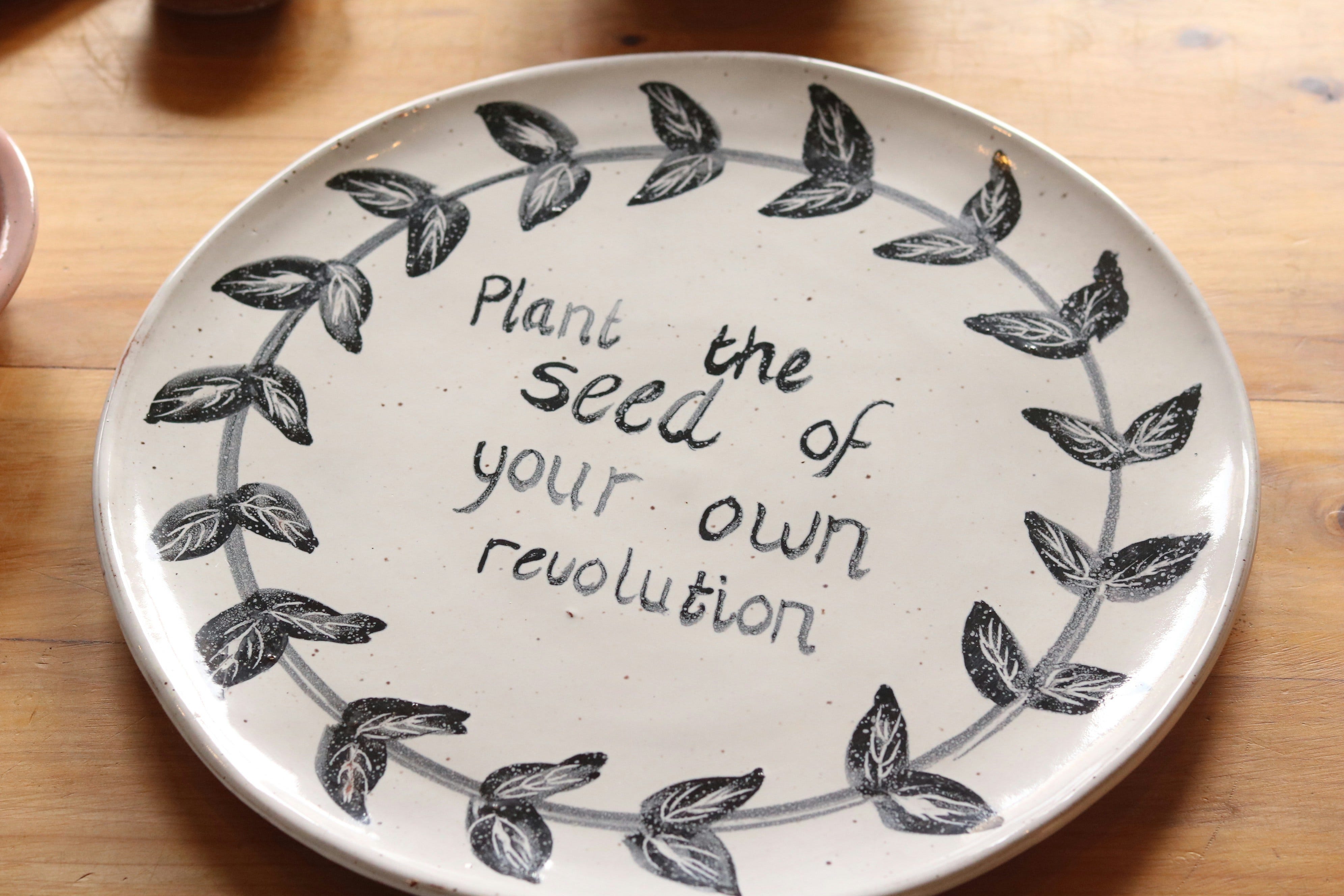
Parker Palmer writes, “I want to write about my resolve to commit to a few of the revolutions we need if we’re going to regain our humanity.” What revolutions do you want to be a part of in the year to come? What issues are truly speaking to you? What do you need to use your voice, whatever its volume or accent or tendency to shake, to stand for? Palmer goes on to say: “Revolutions that succeed are always for something rather than merely against this or that. But if we’re serious about what we’re for, we need to name what we’re willing to stand openly against. It’s not enough to say “Yes!” to things like love, truth, and justice without saying a loud, clear “No!” to their ruthless enemies, risking reprisals as we do.” Think about what is under your desire to change whatever it is your want to change. The real change comes when we figure out what we stand for, and then stand for it, no matter what.
Next: Replace positive thinking with reality.
Leave the good vibes only club is what I’m saying. Maybe this sounds like a bad plan: How can positive thinking ever be a bad idea? Well, when we gloss over what’s truly going on with what we feel (or the situation at hand), we run the risk of making the situation worse than it already is. When we allow space to feel what we feel, even if we really don’t want to allow those emotions in, we set ourselves up to be able to better navigate what comes next. As Oliver Burkeman writes, “Through positive thinking and related approaches, we seek the safety and solid ground of certainty, of knowing how the future will turn out, of a time in the future when we’ll be ceaselessly happy and never have to fear negative emotions again. But in chasing all that, we close down the very faculties that permit the happiness we crave.” Feel what you feel, even if it isn’t positive. Honor what’s going on, not by sinking into despair, but by observing and truly feeling whatever it is you need to feel without attaching a label to it. When we can do that, those tougher emotions and thoughts no longer have (quite as much) power over us. Start an all vibes welcome club instead.
Finally: Don’t (put all your) focus on setting goals (right now).
Yes, you read that right. I’m saying to not focus on goal setting, here at the turn of the calendar year during prime goal setting season.3 Goals can be really helpful, of course. There is a lot of value in visualizing where you’d like to be in three months and thinking through what you’ll need to do three days per week to achieve it.4 However, when we rely only on setting goals (and let’s be honest…it’s really easy to set goals that are WAY too big or goals that don’t truly align with our resources or interests), and we focus all of our efforts on meeting the goal no matter what, other paths get missed: Like the chance to practice acceptance. Or ask for help. Or try something different than we ever have before. It’s easy to forget that goals are tools to help us, not the other way around—we are not indebted to the goal.5 I might even go as far as to say that uncertainty (or even failure) can be a fine outcome if it allows living fully in the present or remaining authentic to what truly matters or learning something new about ourselves. Through the unknown, or even failure, we might be offered the opportunity to shift our perspective, to forgive (self or others), or build resiliency. Embracing uncertainty lets a bit of the mystery back in.
“You don’t have to see where you’re going, you don’t have to see your destination or everything you will pass along the way. You just have to see two or three feet ahead of you. This is right up there with the best advice [on life] I have ever heard.” —Ann Lamott
All of this to say: Decide what good things you’ll do to move toward what you truly need as a new year takes hold. Don’t forget to honor what’s at the heart of your desire to change. Look past the resolutions, the good vibes only energy, and maybe even the goal setting to lean deeply into the revolutions that want to take hold in you. Honor the revolutions that speak directly to your soul and shine your values back out into the world. And if you do set some goals, make sure to set yourself up for success in meeting them by aligning your actions with what you value and ensuring the goal is tiny enough to meet. Be radically authentic. Offer yourself and others simple gestures of respect. That’s where the magic happens.
May 2026 be for you a year of unleashing the magic only you can share with the world.
(Turns out you had it in you this whole time.)
What ends now? And what begins? —Church of Shadow and Light
*kudos if you read all the footnotes…those got a little out of control.
(Please don’t go on “a diet.” Your body needs fuel, and your body craves real food, whole food, food that doesn’t include a bunch of extra ingredients that you can’t pronounce or have numbers attached to them. If you feel you need to start eating differently, maybe start by mindfully enjoying one meal a day. This means no scrolling while eating, just being fully present while fully tasting the food that’s in front of you. Consider where it came from, how it was made, and how it got to your table. Maybe add an extra veggie or drink water instead of soda. Adjust slowly as needed to align your eating habits with what you value.)
I was a personal trainer at a Lifetime Fitness many many years ago—it was my first job out of undergrad. The gym was my office and where I worked out. It was in a basement, there were no windows and I really hated it. I realized I prefer to move my body through the natural elements outside and didn’t like trying to sell my services of helping other people get in shape for a fee. At one point, I didn’t set foot in a gym for a good 20 years. Then last year I took a job working in close proximity to a gym (once again, my office is right next to row of stationary bikes and elliptical machines). I swim in the pool sometimes now, and I got an an elliptical for the first time in many years the other day. I still prefer to do my moving outside, but that’s not always my most viable option. The moral of this story is: do what works for you. Some folks love the gym, some folks hate it. There’s no one right way to get moving: there’s just the way that’s going to work for you in this season of life.
(This is where I’m supposed to try to sell you a program to help you set goals if I was trying to be a good internet salesperson.)
I literally lead a workshop every single week around doing this—taking inventory, visioning, and setting an initial tiny goal. It’s helpful for folks to think through where they’re headed and the very small steps that need to happen to get them moving toward recovery. But we also talk about how important it is to be able to pivot. There is wisdom in a gentle grip on those goals and a willingness to adjust.
(You can change the goal if it doesn’t end up being the right one…discern the difference between pushing yourself in a healthy way and trying to force an outcome you think you should want to achieve.)
Happiest New Year, Heidi!
So true about going on a diet. Less really is more in that regard. Most of the time we eat just two meals a day, some might call that intermittent fasting, but it's really just allowing enough time for your digestion to do what it was designed to do. We really don't need as much food as we consume in a day. And you are also right about enjoying it without the presence of devices. All you need is yourself and the food, and the good mood to enjoy every aspect of how it arrived on your plate. Fasting really does remind you that hunger isn't a bad thing, it's a natural thing we should all be experiencing.
On the other hand, I'm trying to introduce the concept of digital fasting to the world, instead of digital detoxing. I know, they go hand in hand, but I think fasting is the more appropriate concept, even with the overconsumption of technology. Have a wonderful new year!!!